
Ask one hundred people who was the last Anglo-Saxon king before the Norman Conquest, then you might expect a good proportion of them to say: “Harold; you know, the one with the arrow in his eye at Hastings.”
It’s a decent answer, reflective of what has been taught in schools for decades, if not centuries. But is it right? For me, there is a very strong argument to be made for saying: No; there was another, more shadowy figure on the scene whose story has largely been overlooked by all but historians and the most interested of history enthusiasts.
Side note: I once caused a ruckus at a pub quiz when I answered ‘four’ to the question: How many Kings of England were there in 1066? That I would do this – when the I knew the quiz master’s answer was bound to be three – probably reveals a little too much about me. I’ve hopefully learned to curb my enthusiasm a little more now.
Anyway, the theme of this blog is not my nerdish behaviour, nor is it to discuss whether or not this man can call himself king (though we will touch on the latter), but rather to shed a little light on this Lost King of England.
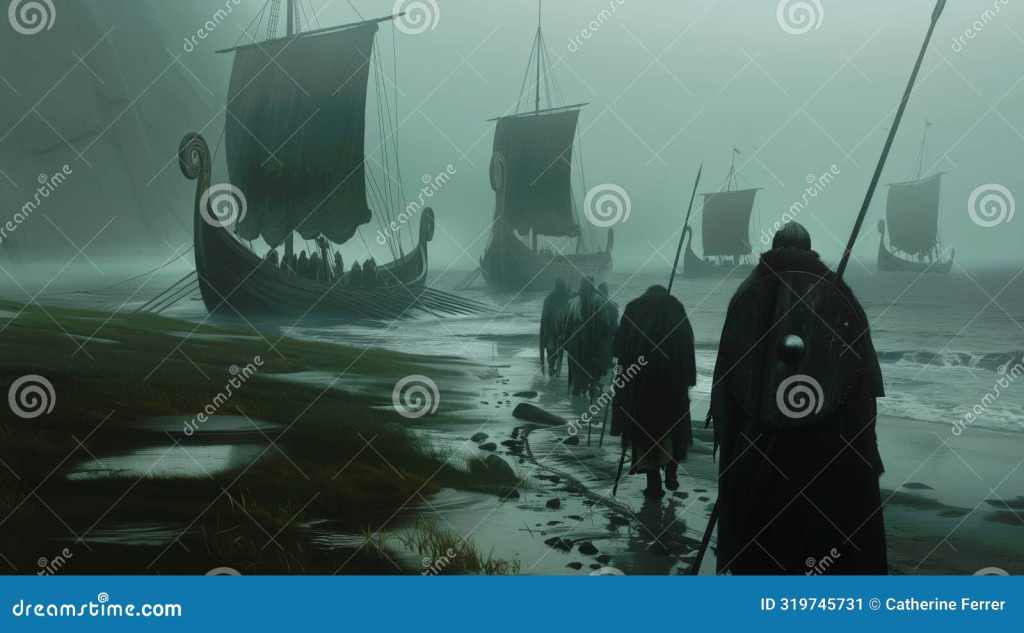
The Last Scion of the House of Wessex.
So, who was this man, and whence did he come? To answer that question, we need to go back fifty years to 1016, the time of the other successful – but less well known – conquest of England in the eleventh century.
Following the death of Aethelraed Unraed in April 1016, his eldest surviving son – Edmund Ironside – did what he could to rally England’s warriors to defend the kingdom against King Knut’s Danish forces. However, despite remaining unbeaten across four great battles that year, Edmund was unable to convincingly defeat the invader before he died. (He either succumbed to battle wounds, was poisoned, or possibly disembowelled by an arrow or spear while taking a dump. You can decide for yourself; though if the last one is true, spare a thought for the poor sod who was voluntold to do the foul deed.)
At the time of his death, Edmund had two infant sons (Edmund and Edward) who fell into Knut’s hands. And you’d be right to fear the worst. But Knut was way too smart to do the deed himself; he didn’t want the ‘child-killer’ epithet on his CV, not when he was yet to become secure on the throne. So, instead he sent the boys to King Olof of Sweden, where he no doubt hoped they’d be murdered quietly.
But King Olof either defied or ignored the instructions, instead taking pity on the children (both of whom were under two years old). Details of what happened are sketchy, but it is thought that he sent them on to Kiev where they grew up at the royal court and came into contact with another exiled prince, Andrew of Hungary, in the 1030s.
Evidently, they decided to join Andrew on his return to Hungary in 1046 to help him fight to reclaim the Hungarian throne. By now, the two English princes were roughly 30 years old. Not much, if anything, is known about Edmund – other than he disappeared from the record, suggesting his death – but Edward (known as the Exile) married a noblewoman, called Agatha (who was most likely descended from a half-brother of Henry III, Holy Roman Emperor) with whom he had three children: Edgar, Margaret and Cristina. It is Edgar who was to go on to become the Lost (or last) King of England. In the next section, we’ll look at how Edgar went from unknown minor noble at the Hungarian court, to potential heir to the throne of England.

A Home Coming
By 1054, it was apparent that the reigning King of England, Edward the Confessor, was unlikely to sire any children due to a combination of his frail health, his advancing years and the supposed fact that his marriage with Edith, daughter of Earl Godwin, was chaste. With Norman influence growing (Edward had spent c.25 years in Normandy after 1016 and had William the Bastard (as he was then) as a cousin), the Witan (or king’s council) were desperate to find a more suitable candidate, someone who was, above all, English and royal.
When someone mentioned Edward’s surviving nephew (the son of his half-brother, Edmund Ironside), the assembled nobles jumped at the chance. A direct male descendent of the House of Wessex, was the perfect choice. And so, Edward the Exile was suddenly Edward the Aetheling (i.e. someone who is fit to rule) and on his way back to the country he’d last seen as a babe in arms 38 years before.
Disaster Strikes
Edward duly arrived (after much political machination at the court of the Holy Roman Emperor in Cologne) in London in 1057. It must have made for an odd sight as Edward disembarked from his ship to be greeted by great crowds of well-wishers who had turned out to see this new heir to the throne. Quite what they made of the middle-aged man wearing strange clothing and unable to speak English is hard to know and certainly wasn’t recorded.
It soon became apparent, however, that all was not as it seemed, as Edward was seemingly blocked from meeting his uncle, The Confessor. To make matters worse, within days of his return, Edward the Exile was dead. His son, Edgar (now Aetheling himself) would have been less than 5 years old at the time.
No cause of death is mentioned, but it is – perhaps – telling, that there is no talk of illness. That Edward might have been poisoned by factions at the royal court opposed to his succession to the throne cannot be proven, but also cannot be ruled out. Though I can’t help but think that the person who benefitted most from the Exile’s death was Earl Harold Godwineson (as we shall see).
What next for Edgar?
Edward the Exile’s widow, Agatha, and her three children continued to live at the king’s court, welcomed and cared for by The Confessor. But, with the Exile’s death, concerns about the succession were, once again, at the forefront of peoples’ minds, not least due to the perceived threat from the Danes, keen to recover Knut’s kingdom.
Whilst it cannot be definitely proven, I think there is a strong case for arguing that the king hoped for a solution that saw Edgar on the throne, backed by Earl Harold’s (and his brothers’) wealth and might.
It was, perhaps, naïve at best to think that Harold, already arguably more powerful than the king, would stand by and play second fiddle to a child, and that the Witan would not deviate from the centuries old tradition of choosing a descendent of the royal line of Wessex. And then there was William of Normandy, claiming that The Confessor had promised him the throne.
The pieces were set for the thrilling denouement.
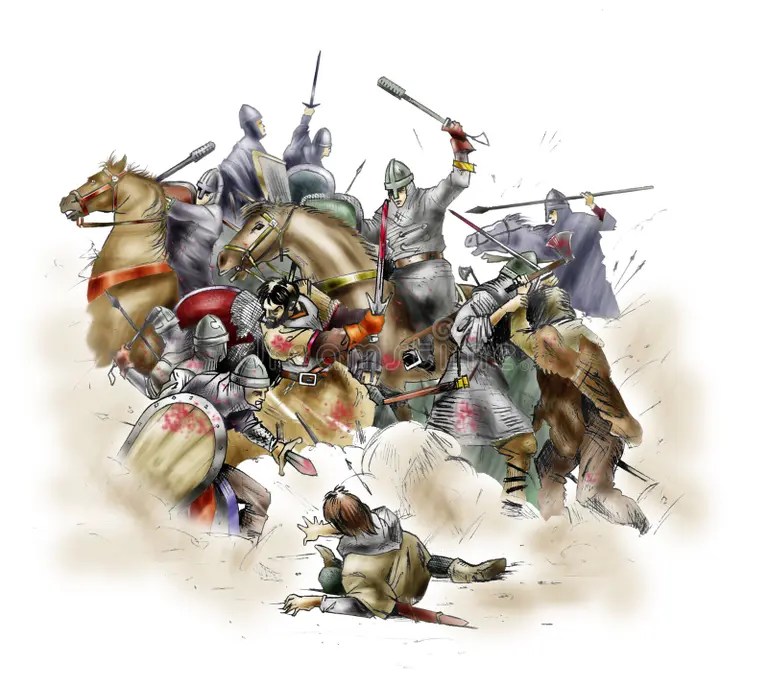
1066 and all that (part 1)
Edgar’s first missed opportunity came on January 5th, 1066. On that day, Edward the Confessor finally succumbed to his frail health. Closest to him at the end was Earl Harold. As you might imagine, there are mixed reports as to what the king’s last words were, whether – for example – he merely entrusted his wife and his kingdom to Harold’s care (as the most powerful noble) until Edgar came of age, or whether – as Harold claimed once he’d leant over the stricken king to hear his dying words – that Edward had nominated him to succeed.
Whatever the truth of it, the pieces had begun to move around the board and Edgar – a teenager at best – was hopelessly out-classed and out-manoeuvred by the much older and more wily Earl. Within hours, Harold had assembled the Witan and used the ‘evidence’ of Edward’s deathbed bequest to secure their vote for him to be king. Whether or not these highest nobles of the land believed Harold’s claim, they were, perhaps, swayed by the thought of Normans to the south and Danes to the east eying the country greedily. If there was going to be a battle, better to have a proven, stalwart general as king than an untested, beardless boy, no matter what his lineage.
So, without Harold’s skill, support or wealth, Edgar was powerless to prevent the usurpation of his familial right.
1066 and all that (part 2)
A second chance for Edgar was to come within the year, however. With Harold’s death at the Battle of Hastings on October 14th, the reign of the so-called usurper was at an end. But, contrary to what many people assume, William of Normandy did not immediately become King of England; that would take another 10 weeks or so. For now, all he had achieved was to kill the king, two of his brothers and a significant proportion of the nobility and fighting men of England. But not all.
Those lords who remained (including Earls Edwin and Morcar of Mercia and Northumbria) were mostly assembled in London with Edgar. Now was his time, surely? There were no other surviving male members of the House of Wessex.
Note: this is where my controversial pub quiz answer comes into play!
With no other viable alternatives, and no desire to bend the knee to this foreign invader, the remaining members of the Witan duly elected Edgar to be their king. Though he was never formally crowned, as far as Anglo-Saxon laws and traditions are concerned, it was the act of election that made you a king, not the placing of a piece of shiny metal on your head in a big church.
So, you see, I was right. England did have four kings in 1066! Albeit Edgar lasted less than two months. But in that time, we do see him confirm the new Abbot of Peterborough – an act of state that would be undertaken by a king. It could not be clearer.
Unfortunately for Edgar, he was unable to exploit his position. There are doubtless many reasons for this, but for me, two or three leap out. First and foremost, he lacked the support to mount a serious challenge to William. Things might have been different had Edwin and Morcar stood with him, but as soon as they withdrew north, his chances were all but dead. Then there was his age and experience, both lacking. Perhaps this was a reason why the remaining great lords didn’t stand with him; they doubted his leadership credentials.
Finally, coming from Hungary at the age of three or four and unable to speak English, cannot have made it easy for him to command loyalty and respect. And it was a task that became that bit harder when his father died within a matter of days of their arrival on these shores.
It comes as no great surprise, therefore, that Edgar realised the game was up before he’d even set out his pieces on the board. In mid-December, he rode out to meet William at Berkhamsted where he knelt before the Conqueror to renounce his claim and swear fealty to the new king.
Aftermath
Edgar never did come close again to winning the throne during the remainder of his life, despite being either involved in, or a figurehead for, a number of rebellions over the years that followed. But I like to think that he – to some degree – had the last laugh in that his line lived on through his sister’s daughter, who was later to marry Henry I (thus combining the Norman and English houses and establishing a line of succession that allows our present day monarch to trace their ancestry back through Alfred the Great, to Cerdic (the founder of the West Saxon dynasty) and ultimately to Woden (and no one is too cool to have an actual God in their family history, right?)).
Perhaps the one remaining surprise is that Edgar was to live on until around 1125 (probably just marking his 70th birthday). Given William’s reputation for ruthless brutality, the fact that Edgar represented the most viable challenger to the throne and the fact that he was twice brought before the Norman king, having risen in rebellion, I am perplexed as to why William just didn’t do away with him – quietly or otherwise.
It’s almost as if William did not take the Aetheling to be anything resembling a serious threat. Perhaps that is the greatest insult of all.
Note: Edgar features in both of my trilogies: The Huscarl Chronicles where we find him in London after the battle of Hastings, trying his best to marshal his support to defend what remained of the kingdom; and in the Rebellion trilogy (book 1 so far) in which he leads the incursion against King William from Durham and York in 1068. I have always been fascinated with this Lost King of England: from his father’s odyssey-like travels across Europe, to his return to England and his ultimately doomed attempt to claim his birth right.
Hopefully you agree with me that he was and should be recognised as a rightful (and the last Ango-Saxon) King of England. That he has been marginalised is almost solely the result of the concept of the winners being able to write the history. For the Normans, at that time, kingship was confirmed when the coronation happened. Hence, no coronation equals not a king.
 Paul Bernardi
Leave a comment