
Note: all images public domain.
Prior to the Norman Conquest, kingship was passed on by election (via the council of nobles known as the Witan(agemot), rather than by primogeniture. Whilst the norm was for the crown to remain within the same family (Harold Godwineson being a notable exception in 1066), it certainly did not always pass from father to (eldest) son. Though the outgoing king may have indicated their desire for that to happen, the Witan was within its rights to ignore such wishes.
Nowhere is this more visible than in Wessex in the 9th century. King Æthelwulf (died in 858) was survived by four living sons. The eldest of these – Æthelbald – succeeded him but would reign for only 2 years (dying in 860 to an unknown cause). He was then followed by his brother, Æthelberht, who reigned for 5 more years (to 865).
With the first two having died with no offspring, Æthelwulf’s next son (Æthelred) then ruled for the next 6 years. But when Æthelred died in 871, he was survived by two sons (Æthelhelm and Æthelwold), both little more than infants at that time. Deemed too young to inherit the throne, it passed to the last remaining brother, Alfred (the Great). In view of the ongoing, monumental threat from the Great Heathen Army, it was an understandable decision: Wessex needed a proven war-leader at the helm. Nevertheless, it must have raised questions about what would happen if and when Alfred died with surviving children.
As it turned out, the events that followed Alfred’s death were so seismic that they almost derailed the burgeoning West Saxon recovery. Had things turned out differently, there might well have been no Edward the Elder, no Aethelstan and possibly no united England.
Real Politik in the 9th Century
To guard against that potential future disruption, King Alfred took a number of steps that were intended to pave the way for his own son, Edward (later known as the Elder), to succeed him.

Not least of these was the fact that he named Edward as ‘rex’ in a charter of the 890s. It was a clear sign that Alfred intended his first-born son to be the next king and thus a blatant attempt to ensure that the dynasty that ruled Wessex would be his branch of the family, rather than his older brother’s.
In addition, he also favoured Edward’s supporters by promoting them to leadership positions so that his son would have trusted, experienced captains to lead his armies when the time came.
The king’s final act was encapsulated within his will wherein he left the bulk of his property to Edward, while only allocating 8 and 3 estates respectively to his two nephews. Although the kingship might not have been in Alfred’s gift, he was making things as easy as he could by ensuring his son’s wealth would far exceed that of Æthelhelm and Æthelwold.
Note: if you’re thinking that the Anglo-Saxons weren’t very inventive when it came to naming their children, then you’d be right. Far too many Æthels to keep on top of for my liking (Æthel in effect means noble – hence its frequent usage in a royal context). The odd Colin or Steve would not have gone amiss.

But despite all his careful preparation, things did not go according to plan when Alfred finally died in October 871.
Æthelwold’s Rebellion (Part 1)
Note: by this point, we should assume that Æthelwold’s brother – Æthelhelm – had died as he disappears from the record.
Doubtless nursing a grievance throughout his adult life, the will may have proven to be the final straw for Æthelwold. There is a good case to be made that his claim to the throne was actually stronger than Edward’s. He was, in reality, the senior Aetheling (i.e. throne-worthy prince) because he had been born before Edward and to a ruling king. This stance is supported by the one surviving charter from this period which was witnessed by both Æthelwold and Edward. Both men are listed as filius regis (son of a king) but Edward’s name appears after his cousin’s.
So, when Edward was duly elected king by the Witan (doubtless dominated by Alfredian supporters), Æthelwold was not prepared to be overlooked for a second time, especially not when age was no longer a bar to his accession.
The first step in his rebellion saw him seize Wimborne in Dorset – the burial place of his father, King Æthelred – along with the royal estates and fortified burh at nearby Christchurch. He then sat back and waited to see what Edward would do. Being late autumn, the harvest would have been gathered in and livestock slaughtered ready for storing over winter. As such, Æthelwold would have been confident that he had the supplies to hold the position for many months.
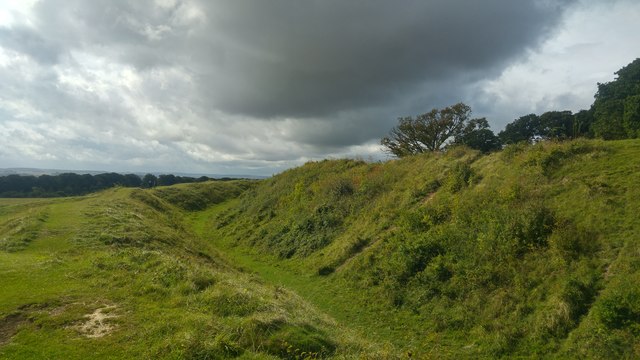
The new king’s response, however, was both swift and decisive. Gathering a sizeable army, Edward moved to occupy the iron age hillfort known as Badbury Rings – just a few miles from Wimborne – thereby effectively sealing his cousin into a narrow area and blocking his path to the north.
Whilst Æthelwold may well have had the strength to meet Edward in battle, he was not willing to risk everything on a single throw of the dice. Instead, he decided to make a run for it, leaving Wimborne during the night with a handful of his closest retainers.
Æthelwold’s Rebellion (Part 2)
Edward’s cousin makes his next appearance in Northumbria where he appealed to the Danes in the kingdom of Jorvik (York) for support. Various versions of the Anglo-Saxon Chronicle assert that they pledged allegiance to Æthelwold and accepted him as (one of) their king(s).
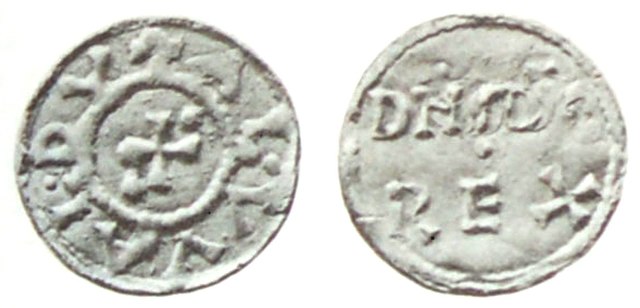
NB. We have evidence of coins being minted in Jorvik inscribed as ALWALDUS REX suggesting he was a key player. You can imagine the Danes saw the opportunity to kick back against the West Saxons by stoking the fires of internal division between the two sides of the ruling family.
After a couple of years, Æthelwold felt strong enough to have another crack at the title. In 901 he took a fleet to Essex where the Danes there submitted to him. The following year, he launched a campaign (with the support of the East Anglian Danes) that took him through Mercia before crossing into Wessex – all the while raiding royal lands.
Once again, Edward was forced into action. Taking advantage of their absence, the king sent an army to ravage East Anglia, thereby forcing the Danes to withdraw to defend their homes.
But, once Edward heard of the approaching Danish army, he ordered his own troops to retreat, which they all did with the exception of the men of Kent. Apparently ignoring the king’s command, they met the Danes in battle at a place called the Holme (unidentified but possibly the Holme that is close to Peterborough in Cambridgeshire.

Presumably outnumbered, the Kentish forces were likely defeated (the Chronicle states that the Danes ‘kept the place of slaughter’). That said, both sides incurred significant casualties including – on the Danish side – Æthelwold himself, Eohric (likely King of East Anglia) and a number of other, lesser nobles. On the West Saxon side, the most notable loss was Ealdorman Sigehelm of Kent (father of King Edward’s future, third wife, Eadgifu).
Conclusion
It is not known why Edward did not meet the Danes with his full army as it would seem likely that they could have secured a resounding victory instead of a narrow defeat. That said, with Æthelwold dead, the immediate threat was over; there were now no further challengers to King Edward’s authority from among the English.
Though this remains a little known episode in the history of England – a sidenote at best – it could not have been much more serious at the time. Who knows what might have happened had Æthelwold succeeding in ousting his cousin? Would the England we know today – the England forged by Edward’s son, Æthelstan, based on his father’s and grandfather’s foundations – exist as we know it?
 Paul Bernardi
Leave a comment