
All images are public domain or author’s own
The legend of the faithful hound
Despite its apparent renown, this is a story I had not heard before until we visited the wonderful little north Wales village of Beddgelert, in the shadow of Snowdon (Yr Wyddfa).
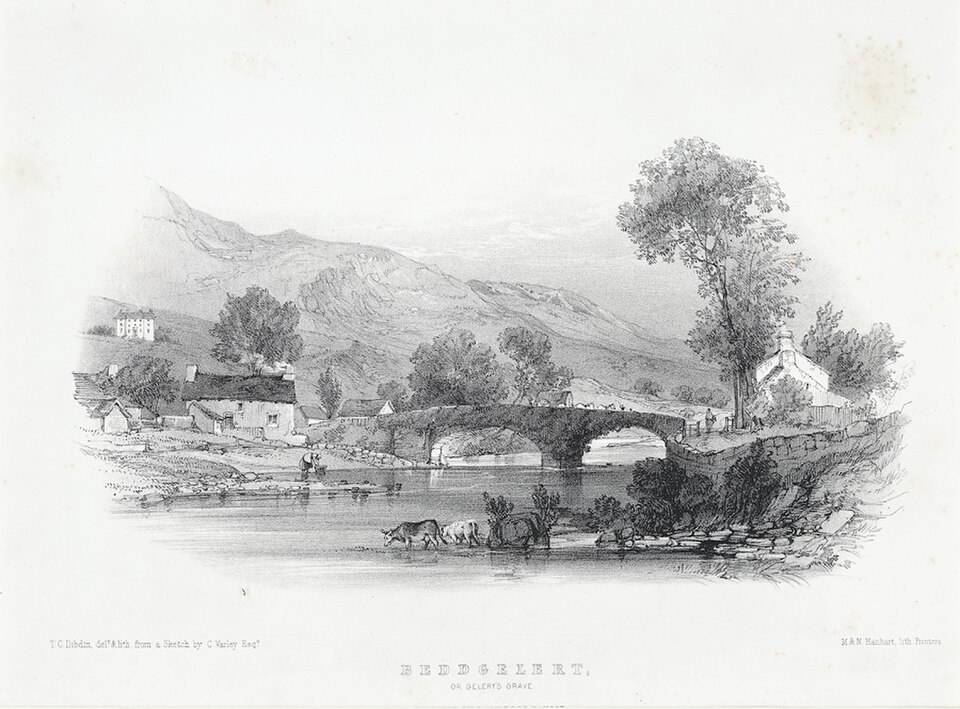
As a dog owner, I found the tale of Gelert, the faithful hound, profoundly moving. It spoke to the centuries old bond between hound and human – something which I often like to reflect in my novels.
It was only when I began digging further into the tale that I discovered the shocking twist that really put a sting in Gelert’s tail.
The Legend of Gelert
So, what’s the story…
It concerns Prince Llywelyn the Great of North Wales and his favourite hound, Gelert, who – as some claim – was a gift from King John (unlikely given what a maliciously miserable miser he was).
Anyway, Llywelyn loved to hunt with his dogs: the hills, valleys and forests around Beddgelert doubtless providing a rich seam of game. One day, as he prepared to leave for a day’s sport, he could not find Gelert anywhere. Unwilling to wait any longer, he set off without the hound.
When he returned at the end of the day, Gelert was waiting for him, jumping up to greet his master with characteristic enthusiasm. As Llywelyn stooped to pet the dog, he noticed that Gelert’s muzzle was coated with blood.
Llywelyn panicked. His thoughts turned immediately to his new born son. Surely Gelert could not have harmed him? Rushing to the boy’s chamber, he was dismayed to find a scene of carnage. Blood spattered the walls, furniture was broken and the cot in which his son had been sleeping was overturned with the bedding strewn in all directions. Of the baby, there was no sign.
Llywelyn was distraught. In his despair, he drew his sword and drove the blade into Gelert’s side, only to find that the dog’s dying yelp was answered by the cry of a baby. Searching the room, the prince finds his child under the cot – unharmed and lying next to a dead wolf.
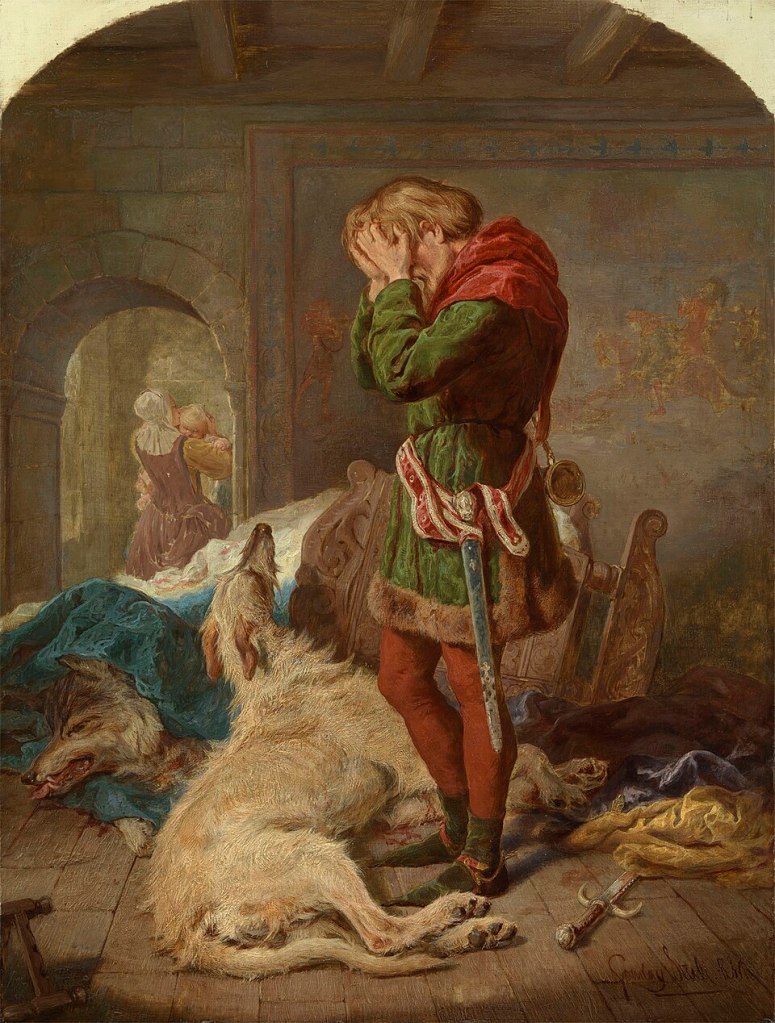
Suddenly everything made sense: Gelert had killed the wolf, thereby saving Llywelyn’s son.
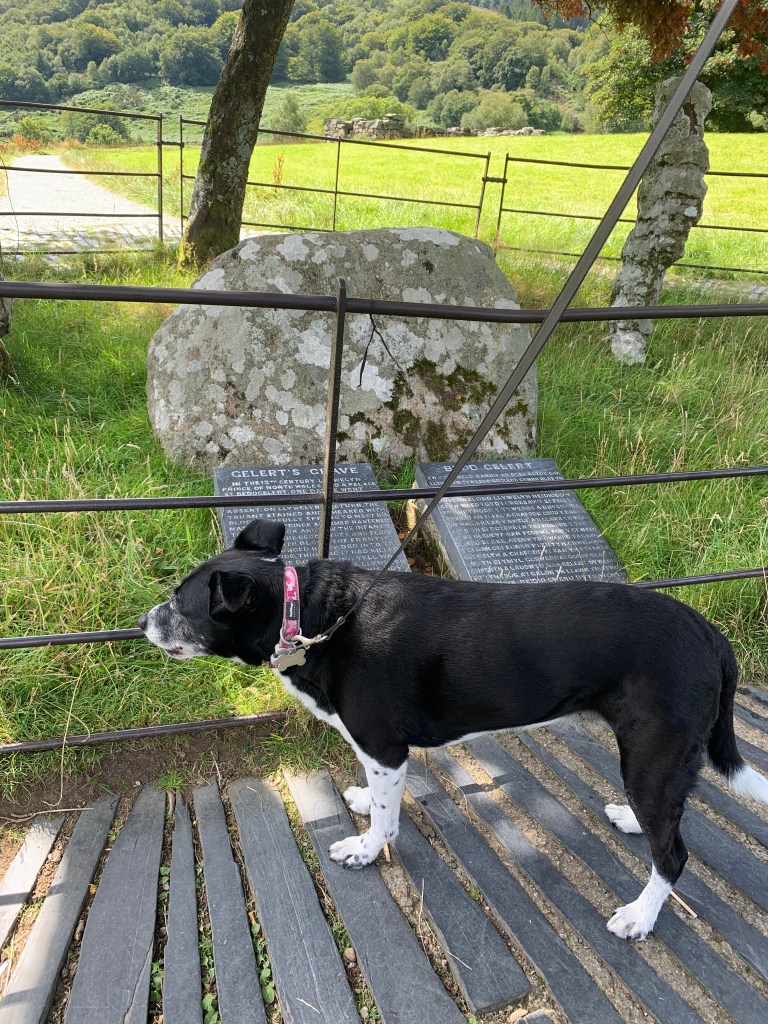
The prince buried his faithful hound with great ceremony, the grave for which can still be seen today alongside a memorial plaque which explains the legend. It is said that, from that day on, Llywelyn never smiled again.
The grave was so well known that it soon lent its name to the village – Beddgelert means: the grave of Gelert.
The Twist
An amazing story, right? It definitely yanks hard on the heart strings to think of poor Gelert dying at Llywelyn’s hand even though he had just saved his son’s life.
The prince’s joy at finding his son alive must have been crushed by the death of his favourite dog in the most terrible of misunderstandings.
The thing is… it’s not true.
At least not entirely.
Rather, the story as handed down to us derives from 1793 when a man by the name of David Pritchard moved to Beddgelert. He had taken over as landlord of the Royal Goat Inn and was looking for a way to drum up trade.
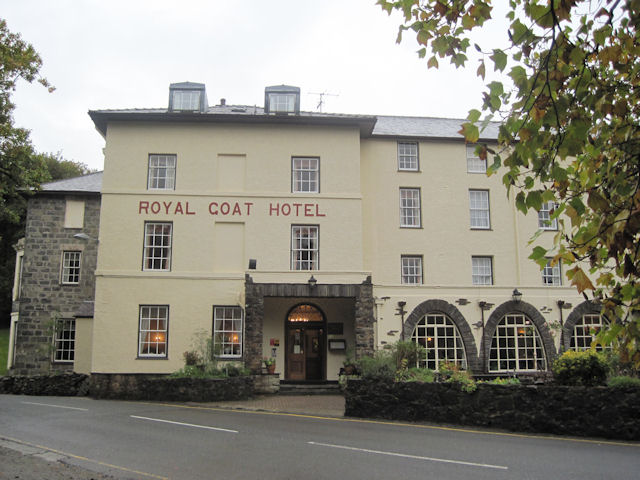
He was aware of the legend of this dog and decided to adapt it to fit with the village. He came up with the name Gelert and raised a cairn at the site of the ‘burial’. He also installed the plaque which can still be seen today by the graveside. It proved to be an amazingly astute piece of marketing that still works to this day.
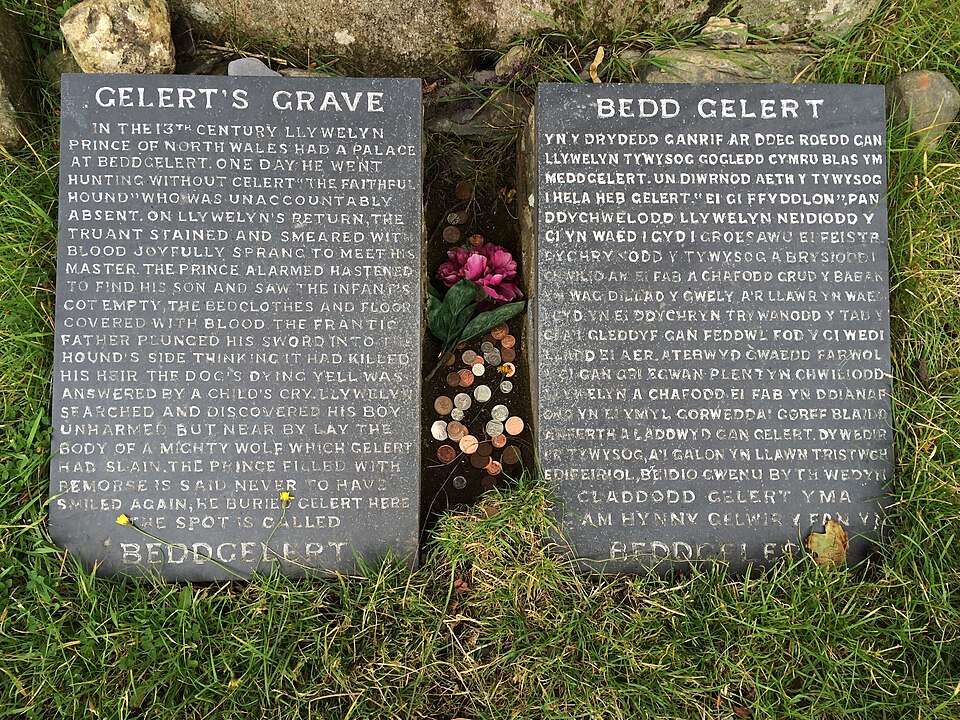
Gelert’s tale and his grave remain a huge attraction for tourists in the area, keeping the Goat Inn’s coffers filled with their coin.
Bravo, Mr Pritchard.


Leave a comment