
NB. All images either public domain or licensed for reuse under this Creative Commons Licence.
In my current novel (set during the reign of King Æthelstan), I have been writing about a gathering that took place at Eamont Bridge in 927.
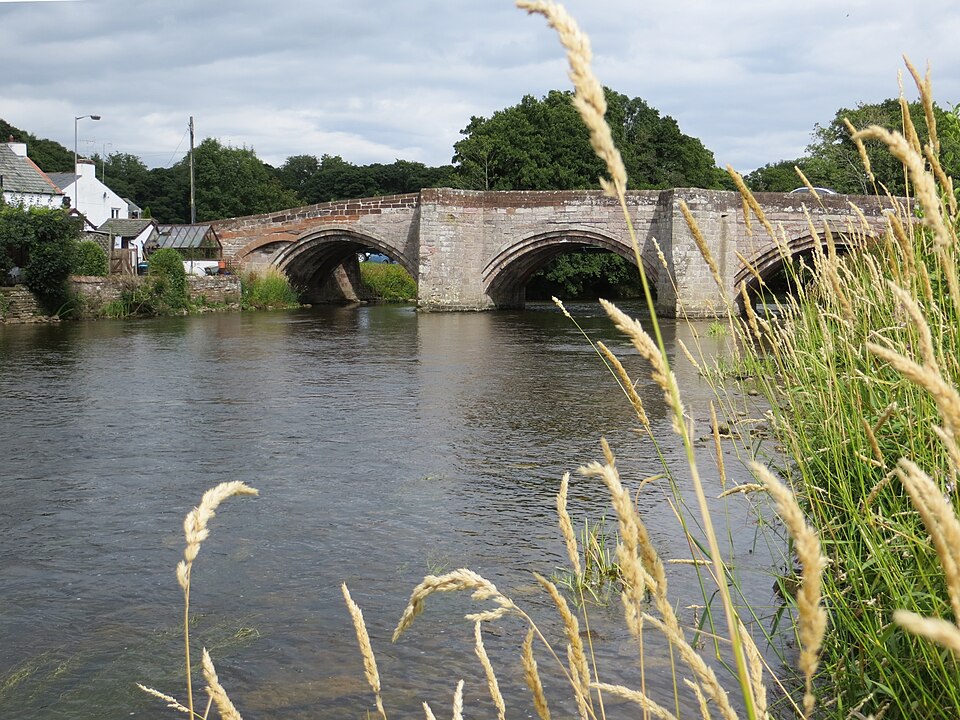
Never heard of it, you say? Well, why would you have? It’s a pretty small and insignificant village a couple of miles south of Penrith in Cumbria (apologies to any residents reading this). However in July of that year, it was to play a key role in the foundation myth for this country we know today as England.
Background
By the time of his death in 899, King Alfred the Great had failed to realise his vision of a single kingdom of English-speaking people. Though this in no way lessens his actual military achievements which included ensuring that Wessex was the only one of the four major kingdoms in Anglo-Saxon England to successfully resist the Danish Great Heathen Army and to set the foundations that enabled his descendants to continue his great work.
When his son, King Edward the Elder, died in July 924, he – along with his sister, Æthelflæd, Lady of the Mercians (d. 918) – had taken back East Anglia and Mercia (including the five boroughs of the Danelaw). There is even a suggestion that the Danes in Jorvik had been ready to submit to Æthelflæd, an astonishing feat that was only thwarted by her untimely death.
If nothing else, however, all the lands south of the River Humber (excluding Wales) were now united under a single ruler. Something that had not been the case since the Romans ruled the province of Britannia. The stage was now set for Alfred’s grandson, Æthelstan, to make the final moves in the game of thrones that resulted in the birth of England.
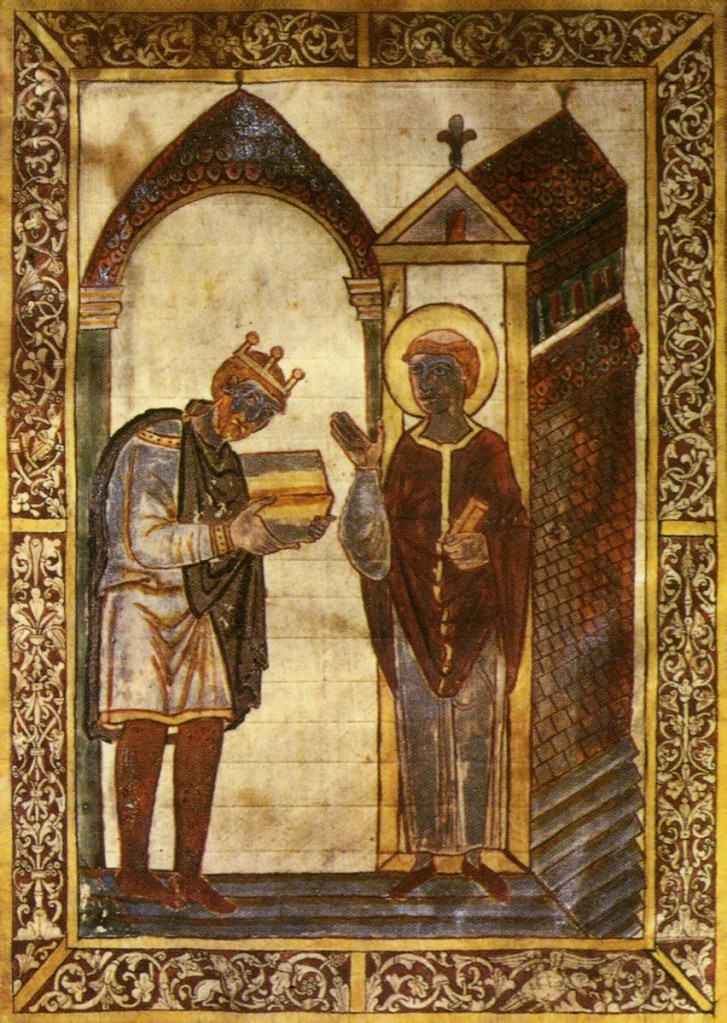
The Road to Eamont Bridge
Though Edward the Elder died in July 924, Æthelstan was not crowned as his successor until September the following year. In fact, it was by no means certain that he would become king at all due to the existence of two sons that were born to King Edward and his second wife, while he was actually king (unlike Æthelstan, who’d been born while King Alfred was still alive).
NB. For more details on the political machinations during these 14 months, please see my other article…. https://paulbernardiauthor.com/2025/12/11/aethelstan-the-king-who-nearly-wasnt/
However, once his position was unassailable, Æthelstan began to demonstrate the value of the skills and experience he had gained under his aunt’s tutelage at the Mercian Court for the last twenty or more years. The blend of military might and effective diplomacy that he deployed would be a feature of his reign, making him more than worthy (in this author’s opinion) for consideration as one of England’s greatest monarchs.
Much of his diplomatic strategy revolved around marital alliances. In this he was aided by the fact that his father had been prolific in the bedchamber with all three of his wives. In all, Æthelstan had at least 12 siblings (possibly 13), of whom 7 (possibly 8) were girls, each of whom was a possible ‘peaceweaver’ (i.e. could be used to secure an alliance with the ruler of another kingdom who might otherwise have been hostile).
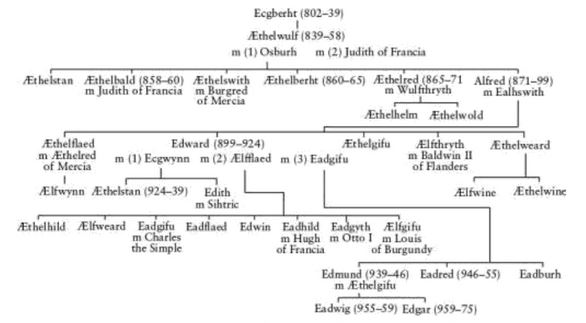
In 926, however, only one of those sisters was of a suitable age to be married: his full sister – probably called Edith – by Edward’s first wife, Ecgwynn. One of Æthelstan’s first acts as king, therefore, was to marry her to Sihtric Caech, the Hiberno-Norse King of Jorvik (York).
For Æthelstan, this made sense as it secured his northern border (at least in the short term) while for Sihtric, Æthelstan’s support would be a valuable deterrent for his various kinsmen or warlike neighbours who might wish to supplant him.
However, in a fine example of ‘the best laid plans…’, the alliance was not destined to be long-lived for Sihtric was dead within a year. The sources are irritatingly vague on the nature of his death (e.g. the Annals of Ulster simply say: “Sitric, grandson of Ímar, king of the dark foreigners and the fair foreigners, died at an immature age”), but it feels reasonable to assume his death came at the hands of one of the various threats that he’d faced.
The immediate upshot of Sihtric’s death was twofold. First, Æthelstan’s sister was now alone and vulnerable in what was effectively a foreign kingdom. Secondly, there was now a power vacuum on his northern border. Both of which needed fixing.
Æthelstan did the only thing he could in the circumstances: he stepped into that vacuum. In doing so, he rescued his sister (who most likely then took holy orders – possibly at Polesworth) and successfully annexed the Kingdom of Jorvik.
Once again the sources vary in terms of just how easily he achieved this feat. The D version of the Anglo-Saxon Chronicle, for example, states that “Sihtric died, and King Æthelstan succeeded to the kingdom of the Northumbrians”, suggesting that it had been a bloodless coup.
But then, the E version details that in 927, “King Æthelstan drove out Guthfrith”. Whatever the truth of it (including whether this Guthfrith was Sihtric’s son or rather his cousin is shrouded in mists that are beyond the scope of this article. The core fact was that Æthelstan had – by this action – successfully united all the lands south of the River Humber.
But the king was not done. His sharp political acumen led him to realise that a huge opportunity lay within his grasp if only he was willing to take the risk. His takeover of Jorvik had both cemented his position as the pre-eminent power in the British Isles, but it had also provided a huge demonstration of his ability, confidence and strength.
He was now ready to exploit the lesson that his neighbouring kings must have already learned. He was ready to use that power to become the first king of a united England.
The Treaty of Eamont Bridge
Why Eamont?
The site would not have been selected at random – far from it. In fact, Eamont was the perfect choice for two main reasons:
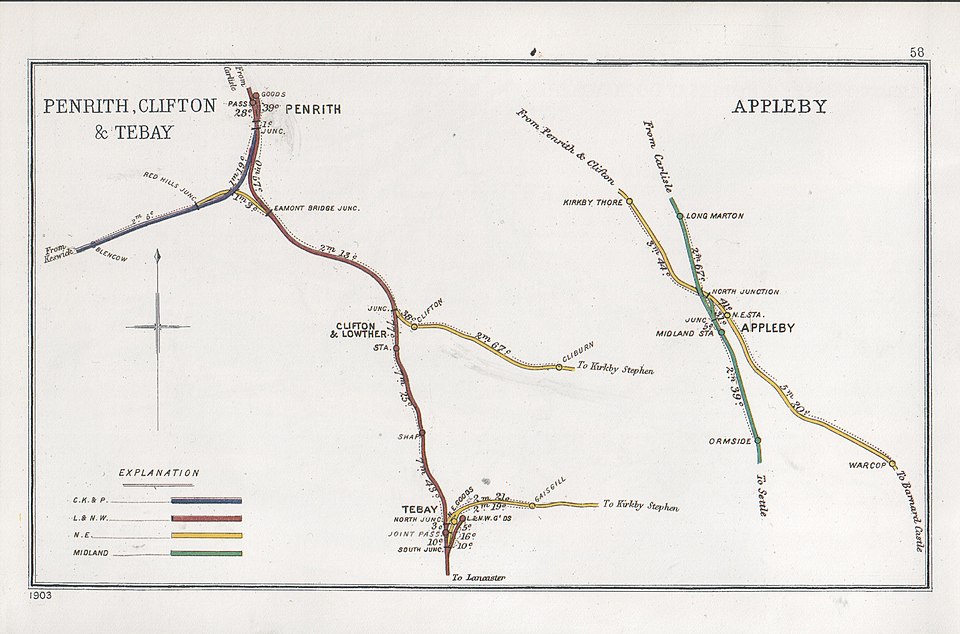
- Logistically, it was relatively easy to reach in that a number of Roman roads coincided near there, as well as being at the confluence of two rivers (the Eamont and the Lowther).
- Strategically, it sat on the border between the (new) northern reach of Æthelstan’s domain and the Brittonic kingdom of Strathclyde. Over the centuries these sorts of locations had often played a significant part in the history of the various Anglo-Saxon kingdoms, being the locations for numerous battles or treaties.
- The choice also displayed a measure of his respect. Just one year earlier, Sihtric Caech had travelled to Tamworth (deep inside Mercia) in order to secure an alliance with Æthelstan (as well as marry his sister). In this case, however, the king was meeting ‘on neutral ground’, thereby giving the impression (at least) of being a peer of the others.
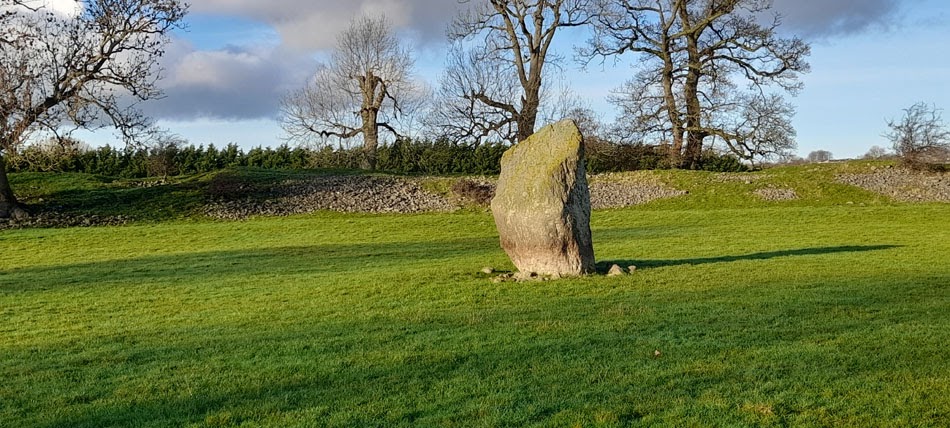
Whilst we don’t know exactly where in Eamont Bridge the meeting took place, there are two very likely candidates in the vicinity. Firstly there is Mayburgh Henge, a circular bank up to 6.5m high that encloses an area with a diameter of 90m. At its centre (today) is a single monolith, although in 927, there were at least four stones clustered together.
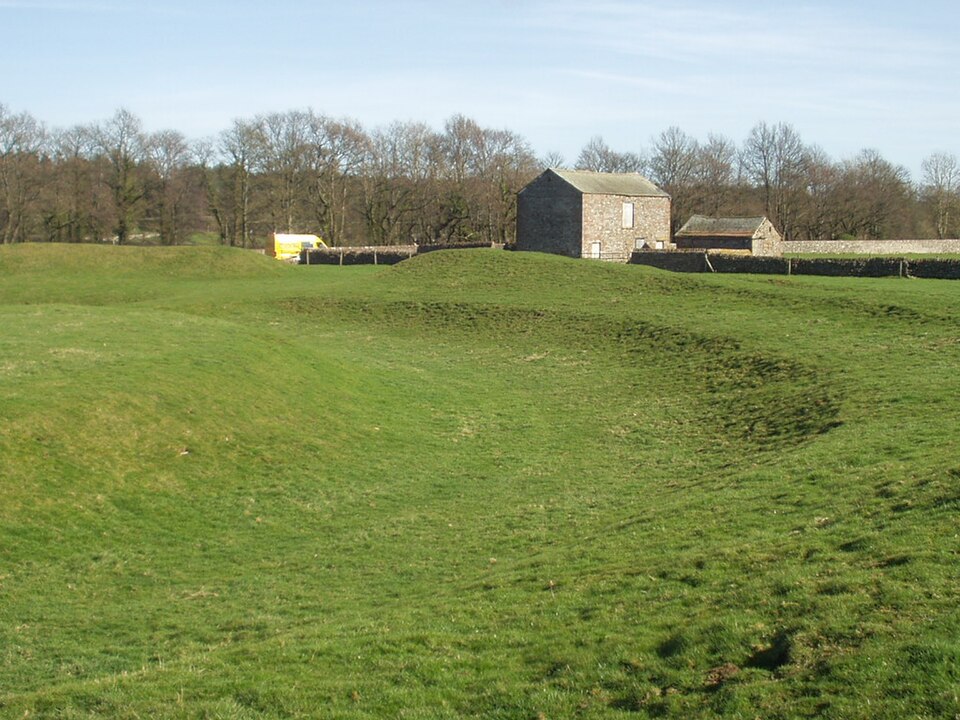
The other site, just 400 metres away, is known as King Arthur’s Round Table. This is another circular earthwork enclosing a ditch measuring 12m wide and 1.5m deep. Either would have made for a suitably imposing location – though I favour the former due to its more impressive grandeur and size.
The Players
Other than Æthelstan, the other kings/nobles either known or suspected to have attended the meeting are:
- Hywel Dda (‘the Good’; d. 949 or 950), ruler of the Welsh kingdoms of Deheubarth and latterly of Gwynedd
- Constantine II (d. 952), king of the Scots
- Owain ap Hywel (d. c. 930), king of the southern Welsh kingdoms of Glywysing and Gwent
- Ealdred, lord of Bamburgh.
(And possibly also, Owain ap Dyfnwal (fl.934), king of Strathclyde/Cumbria.)
The Motivation
So, why would all these kings and nobles be willing to accept Æthelstan as their overlord?
A number of reasons come to mind. First and foremost, all of them were beset by a mixture of internal and external threats. Chief among the external threats was the continued presence of Viking raiders, while more than one faced challenges from internal rivals.
The two kings from Wales were emerging as the most significant rulers in that territory. They had previously submitted to King Edward the Elder and were now happy to transfer that allegiance to his son. For them, swearing fealty to Æthelstan was both a continuation of an existing policy as well as helping to maintain the military security that they both craved.
Thirdly there was the lesson of Jorvik. It could not have been lost on the attendees that recent events had shown that it would be better for them to be on Aethelstan’s side than against him.
The terms of the treaty would have included that none may attack the other and that they would come to the support of any who was themselves attacked. Knowing that you had Æthelstan in their corner would have made for a pretty effective deterrent for any would-be assailants.
The Aftermath
One of Æthelstan’s first acts after the gathering was to drive home his new status. Henceforth, in charters and on coins, he would style himself no more as Rex Angulsaxonum but rather as Rex Anglorum (King of (all) the English). He was even known to have called himself Rex Totius Britanniae on occasion.
Of course, no one knew on that July day whether the treaty would stand and subsequent events (both the northern conspiracy at the Battle of Brunanburh (937) and the loss of Jorvik during the reign of Aethelstan’s successor, Edmund) showed that it would have a shaky childhood. But there is no doubt that the idea of England had taken hold and that it was strong enough to survive these early setbacks.
‘and he brought under his rule all the kings who were in this island: first Hywel, king of the West Welsh, and Constantine, king of the Scots, and Owain, king of the people of Gwent, and Ealdred, son of Eadwulf from Bamburgh. And they established peace with pledge and oaths in the place which is called Eamont [æt Eamotum], on 12 July, and renounced all idolatry [deofolgeld] and afterwards departed in peace’
D version of the Anglo-Saxon Chronicle (Entry for 927).


Leave a comment