
All images public domain
If you’re the sort of person that enjoys a tale filled with plenty of gross, vomit-inducing detail, then this is the article for you. For clarity, I absolutely consider myself a fully paid up member of that club. The grosser, the better.
William the Conqueror died on 9th September 1087. He was 58 or 59 years old. Whatever your opinion of him (and mine is not all that favourable), it cannot be denied that he was a larger than life character who loomed over the history of Western Europe in the second half of the 11th Century. Not content with that, however, he was destined to be larger than life in death too.
The Death
When William had invaded England, he had been in his late 30s. Although he would have been past his physical prime at that point, he would still have made for an imposing figure. Not quite Cristiano Ronaldo, more of a James Milner. Solid, fit and with enough stamina to cover every blade of grass for the whole of a match.
The accounts of the battle of Hastings back this up in the sense that he was leading from the front throughout and had several horses killed under him. That the battle is said to have lasted most of the day demonstrates just what a physically demanding experience it would have been. Furthermore, as king, he would not have been able to sneak off for a ciggie and a sit down.
Twenty years later, however, all that had changed. Now fast approaching his sixties, William was no longer the fine physical specimen he had once been. A combination of gorging on the best foods that money could buy and less in the way of physical exercise. A king had to put on a show after all, to impress his courtiers as well as visiting dignitaries. And as he was ruling England & Normandy, he probably had to do everything twice (think the Vicar of Dibley Christmas Day episode where Dawn French had to have 4 separate Christmas dinners).
Either way, the lad had become an absolute porker by 1087.
It must have come as a disappointment, then – not to mention a struggle – that in July of that year he found himself back in the saddle (it’s the horse I feel sorry for), campaigning against his own son, Richard Curthose (a nickname that William had devised for him on account of his short stature (physically and, perhaps, mentally too)). Lots for Freud to unpack in that father-son relationship.
For whatever reason (and it may well have been a protest by the poor animal), the story goes that William’s horse reared unexpectedly – perhaps startled by a snake. The younger William might have manage to deal with the sudden lurch, but fat, elderly William had no chance.
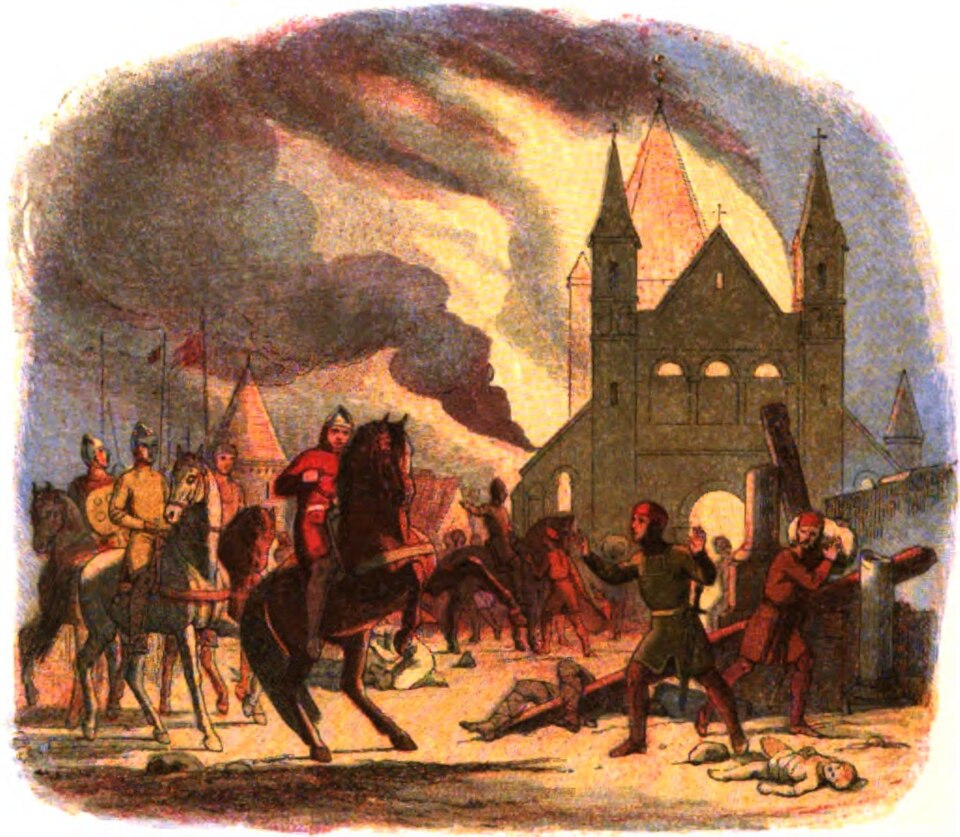
William was thrown forward so hard that his belly was forced against the stiff pommel on the front of his saddle, rupturing his intestines.
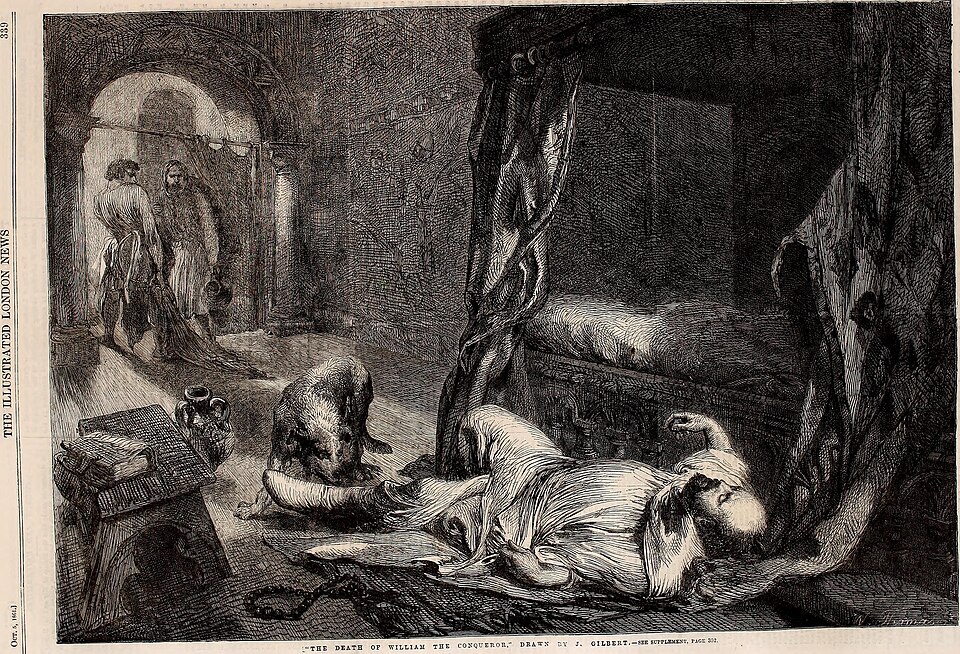
He didn’t die straightaway though, lingering on for six or so weeks in what must have been total and continual agony (some might say the least he deserved in recompense for the ruthless brutality he had visited upon others during his reign). His vast bulk meant that his physicians found it impossible to undertake any surgery. He eventually died in Rouen on 9th September.
Taking care of business
It is perhaps a reflection of the high esteem <sarcasm mode> in which King William was held (even in Normandy), that his attendants deserted him the moment he breathed his last. Maybe they made off with the family silver, or perhaps they wanted to be far away when the shit hit the fan (literally as things turned out).
Either way, it was some time before anyone got to work on preparing the body for burial. Presumably the king just lay there decomposing until someone could be voluntold to get on with it. Eventually, the embalming was complete; as far as was possible due to the ongoing process of putrefaction.
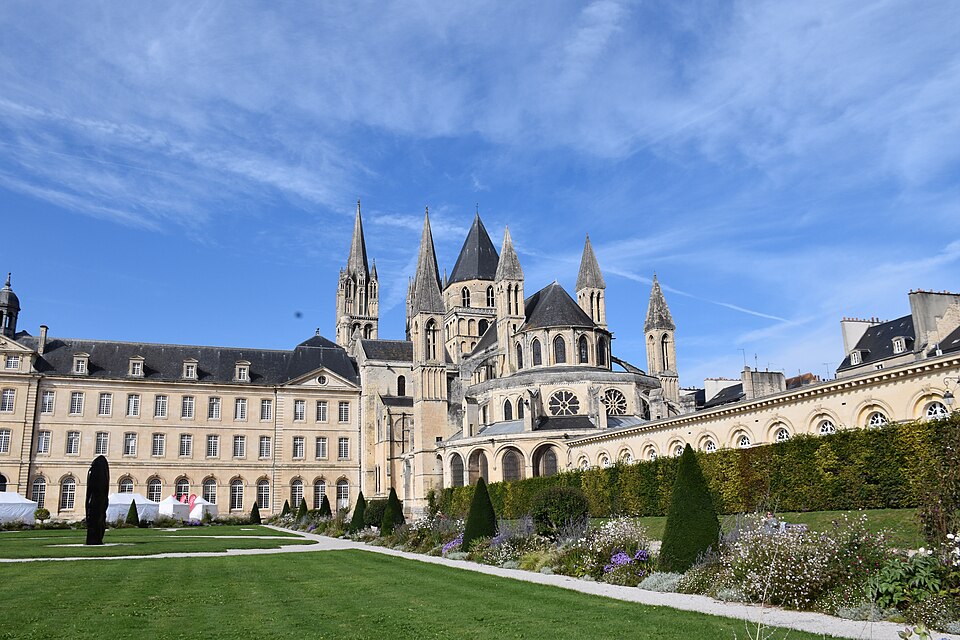
It was then a 70 mile journey from Rouen to the Abbaye-Aux-Hommes in Caen where William was due to be interred, a slow, leisurely journey down the River Seine in the late summer heat.
The Funeral
Anyone who knows a thing or two about dead bodies (note: I don’t count myself among them) will know that in medieval times, burials needed to take place as soon as possible after death; even quicker in the summer time. Left to their own devices, rotting corpses tend to swell up as the process of decomposition generates all sorts of foul gasses within the bowels. Heat speeds things up.
In William’s case, we were likely into October by the time of the burial in Caen. Bloated at death, William’s body must have resembled a grotesque balloon (like one often sees in political protests these days – you know the ones I mean). Even then, proceedings were delayed yet further when one of the ‘mourners’ piped up that the ground on which the Abbey had been built had been robbed from his father by King William. After an unseemly bout of horse-trading, a compensation figure was agreed.
Worse was yet to come though; a final, momentous act to mark the burial of a tyrant. When it came to the point where the body was to be lowered into its sarcophagus, the monks found it was too big to fit in. It would have likely been a tight squeeze back on 9th September, but now, no amount of heaving, shoving or twisting was going to work.
That’s not to say that the monks didn’t give it a good go. In fact, so hard did they push and prod that – and you’re likely ahead of me here – the putrid corpse burst, releasing a foul stench accompanied by a noxious spray of bodily fluids which, according to Orderic Vitalis: “assailed the nostrils of the by-standers and the whole crowd”.
I can only surmise that the rest of the service was completed at lightning speed, allowing the crowd – all doubtless breathing through their mouths – to escape as soon as possible.
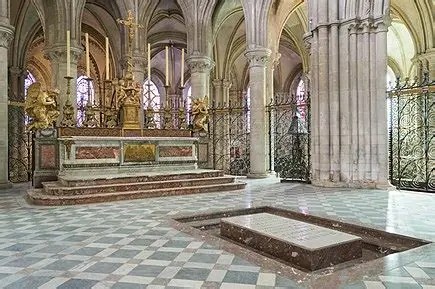
It was to be William’s last act on the stage of European History. Bastard by name, bastard in life and an utter bastard in death.


Leave a Reply